

China and Japan escalate dispute over naval radar incident
China and Japan escalate dispute over naval radar incident
Posted December. 09, 2025 08:13,
Updated December. 09, 2025 08:13
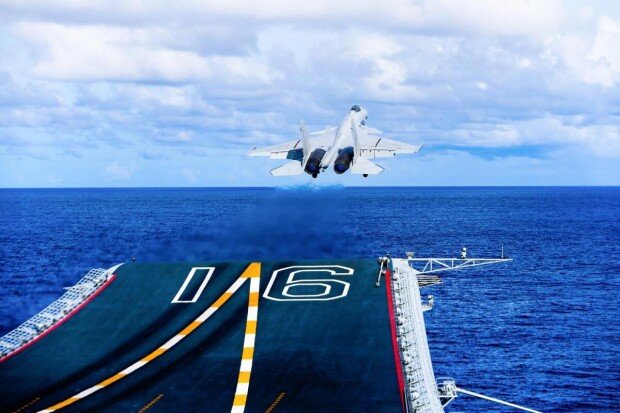
Tensions between China and Japan have escalated after a Chinese fighter jet targeted a Japanese Self-Defense Force aircraft with its radar over international waters on Dec. 6. Two days later, Japan reported that planes and helicopters from the Chinese aircraft carrier Liaoning carried out about 100 takeoffs and landings near islands east of Okinawa Prefecture, underscoring China’s growing military threat. China responded the same day, criticizing Japan for expanding military facilities on Mage Island, an uninhabited islet in southwestern Japan close to Taiwan.
Since Japanese Prime Minister Sanae Takaichi stated in parliament on Nov. 7 that Japan would intervene in a contingency involving Taiwan, tensions between the two countries have persisted. Each side continues to accuse the other of destabilizing regional security around Taiwan. The two nations are also escalating a propaganda campaign as they attempt to shape international opinion in their favor.
● Chinese carrier group conducts U-shaped maneuver around Okinawa
Japan’s Joint Staff Office said the Chinese Liaoning carrier group sailed through the East China Sea on Nov. 5, passing between the southwestern part of Okinawa and Miyako Island before entering the Pacific. The group then moved between the eastern side of Okinawa and Minamidaito Island, reaching waters about 190 kilometers east of Kikai Island in Kagoshima Prefecture on Nov. 7.
During the operation, the Liaoning’s aircraft and helicopters conducted about 50 takeoffs and landings each day on Dec. 6 and 7, totaling roughly 100 over two days, according to the Joint Staff Office. NHK, citing Japan’s Ministry of Defense, reported that this marked the first confirmed instance of Chinese carrier-based aircraft taking off and landing in waters between Okinawa and Minamidaito in the Daito Islands. The ministry also said the Chinese carrier moved around Okinawa in a U-shaped formation. Analysts noted that the maneuver appeared similar to Chinese military encirclement exercises around Taiwan, now executed near Okinawa. The Joint Staff Office said it deployed the destroyer Teruzuki for surveillance, reconnaissance and intelligence missions, while scrambling Self-Defense Force jets in response.
China also criticized Japan’s recent military activities. The state-run Global Times released two satellite images of Mage Island on Dec. 8. Large facilities that were not present in images from May 2024 appeared in photographs taken in September 2025.
Citing Chinese military experts, the Global Times reported that the island now contains a 2-kilometer runway, ammunition storage, fuel infrastructure and temporary piers capable of accommodating large warships. The report argued that Mage Island could enable Japan to pose a threat not only to Chinese naval and air forces operating in the East China Sea but also to China’s eastern coast.
● China urges Japan to stop false propaganda while Japan rejects claims
Following the radar incident on Dec. 6, the two governments exchanged blame. Japanese Defense Minister Shinjiro Koizumi held an emergency news conference unusually early at 2 a.m. on Dec. 7, sharply criticizing China’s actions. Later that day, Prime Minister Sanae Takaichi said, “This is extremely regrettable. We strongly protested to China and demanded strict measures to prevent recurrence.”
China’s Foreign Ministry issued its response the same night in a spokesperson Q&A format, asserting that frequent close reconnaissance and interference by Japanese aircraft during China’s routine military activities pose the greatest threat to maritime and air safety. The ministry urged Japan to stop actions that disrupt China’s regular training and to cease what it called irresponsible propaganda and political manipulation.
Japan pushed back the following day. At a Dec. 8 press conference, Chief Cabinet Secretary Minoru Kihara countered that the Self-Defense Forces were carrying out missions to respond to potential airspace violations while maintaining a safe distance from Chinese aircraft. He added that China’s claim that Japanese aircraft seriously endangered the safe flight of Chinese planes was unfounded.
Newtanqin, a social media account affiliated with China’s Xinhua News Agency, said on Dec. 8 that the Sino-Japanese conflict has entered a “second phase,” signaling a further escalation in the information and propaganda battle. The post stated that Western countries have remained silent on Prime Minister Takaichi’s remarks for now, but warned that if Japan continues to portray itself as the victim, Western nations may eventually feel compelled to side with Tokyo.
In-Chan Hwang hic@donga.com




![매일 풀업 60개씩 하는 75세 회장님… “허리 통증도 없어져”[양종구의 100세 시대 건강법]](https://dimg.donga.com/c/138/175/90/1/wps/NEWS/IMAGE/2025/12/13/132956597.1.jpg)



 About Dong-A Ilbo